I get asked this a lot on jobsites and in forums: “If we cut this slab/wall, will the building fall down?” My short, honest answer is: it depends — and the rest of that sentence is the long version. I’ve spent time on renovations, talked with contractors and engineers, and read the technical guides, so I’ll walk you through what I think matters, where the real risks lie, and how modern methods make cutting far safer than a decade ago.
Why saw cutting even matters
Concrete isn’t just a slab of rock — it’s a composite with steel (rebar), sometimes prestressing strands, and load paths that engineers design carefully. A saw cut changes the material and can change how loads travel through a structure. If you accidentally cut a main reinforcement bar or remove a key section of a wall, you can weaken the structure. On the flip side, careful saw cutting is often the way to make controlled openings for services, create expansion joints, or remove damaged concrete without causing wider damage. Practical guides and industry pages emphasize that precision and technique matter hugely.
Timing, method and who’s doing the cutting
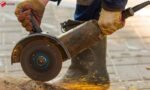
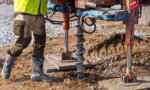
The “how” and “when” are sometimes more important than the “where.” For example, early saw cuts in new slabs are done to control cracking; in renovations, wall sawing or coring is used to keep vibration and collateral damage to a minimum. Different tools (hand saws, wall saws, wire saws, core drills) cause different amounts of vibration and heat — and those affect nearby reinforcement and the concrete matrix. Industry writeups repeatedly recommend matching the method to the job.
Consult an engineer — not just for ceremony
I’ll be frank: I’m not a structural engineer. When a cut could affect a load-bearing element, I always advise getting an engineer involved. The pros say the same — “Consulting an engineer is recommended if you want a professional opinion on how to safely carry out Concrete Saw Cutting procedures.” That’s not fear-mongering; it’s practical risk management.
Real examples that show risk vs reward
- On a small renovation, a contractor saw-cut a doorway in a non-load-bearing partition and everything was fine — quick, clean, no drama.
- On the other hand, there are documented cases where cutting into prestressed members or cutting reinforcement without proper support led to costly repairs or reinforcement of adjacent members. The Railways technical notes and repair guidelines make it clear that excessive removal near prestressed elements can change strand profiles and reduce capacity. That’s not something you want in a bridge or major beam.
These examples underline a pattern: routine, planned cutting by experienced crews is low risk; improvised or uninformed cutting near critical elements is high risk.
Modern tools reduce collateral damage
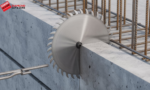
Technology has helped a lot. Diamond blades, water-cooled saws, precision wall saws, and wire sawing let cutters remove concrete with minimal vibration and better control. Add GPR scanning and non-destructive testing before you cut, and you can see rebar, conduits, and voids so you’re not sawing blind. Several reputable cutters now advertise GPR-first workflows — that’s a trend I like, because it’s basically doing homework before you swing the saw.
Who you hire matters — and yes, marketing names pop up
I’ve seen a lot of “we cut concrete” claims, but the difference is in training, equipment, and process. Companies that combine scanning, seasoned operators, and good communication with engineers tend to produce the safest outcomes. For small mention, I’ve encountered names like Diamond Cut and Core in industry listings — firms like that often promote 24/7 response and combined scanning + cutting workflows, which is the direction the industry is moving. (I’m mentioning a business name a couple of times here because it comes up in regional searches — this isn’t a paid plug.)
Common mistakes I see (and how to avoid them)
- Not scanning first. You don’t want to cut rebar or sleeves by surprise — get a GPR scan.
- Ignoring load paths. If that wall or beam is carrying load, stop and consult an engineer.
- Using the wrong tool. Wire saw vs. hand saw vs. core drill — pick the right one.
- Rushing. Fast cuts without cooling or correct depth can overheat steel or create cracking.
Where my understanding is limited
I read research papers, manuals, and industry blogs, and I’ve spoken to techs and engineers — but I don’t sit in a professional structural engineer’s chair when complex load calculations are on the line. For complicated situations (prestressed members, historical structures, bridges), only a licensed structural engineer with site data and drawings should give the final go-ahead. My role here is to highlight the practical risks and controls, not to replace formal design checks.
What experts and discussions online often agree on
Online how-to guides, contractor blogs, and manufacturer literature converge on several points: plan before you cut, use the right equipment, scan for reinforcement, and consult engineers when loads could be involved. Those themes form the backbone of sensible practice across the industry.
A bit of humor (but seriously)
If you’re tempted to improvise a cut because “that little piece won’t matter”—remember: concrete has a terrible memory for jokes and an excellent memory for causing headaches later. Trust the scan; trust the plan.
Looking forward — what might change
I expect more integration of pre-cut scanning, on-site digital modelling (so you can overlay GPR scanning results on drawings), and robotic or remotely guided saw systems that limit human error. Materials science improvements (better repair mortars and retrofitting methods) will also make post-cut repairs less costly. But uncertainty will remain where old drawings are missing or where hidden reinforcement or prestressed elements exist — these are the grey areas that still need human judgement and structural calculations.
Final takeaway
Concrete saw cutting is critical when it touches structural components, and routine when it’s done on non-load-bearing elements by experienced crews. The trick is a good process: scan, plan, choose the tool, consult experts when needed, and hire experienced crews. Done properly, saw cutting is a precise surgical tool — done poorly, it’s a wrecking ball in disguise.
Short FAQs
Q: Can I saw-cut a concrete wall without an engineer?
A: If it’s non-load-bearing and you’ve scanned for reinforcement, a qualified cutter can do it. If there’s any doubt about load or prestressing, get an engineer.
Q: Will sawing always damage rebar?
A: Not if you scan first and plan cuts to avoid reinforcement. If rebar must be cut, do it under engineer direction and with proper remediation.
Q: What’s the safest cutting method for structural work?
A: Low-vibration methods like wall sawing and wire sawing, combined with coring and GPR planning, are generally safest.
Q: How do I find a trustworthy cutter?
A: Look for contractors who use GPR/scanning, have insurance and references, and who coordinate with engineers — companies that list those services (for example, Diamond Cut and Core among others) are following current best practices.